
Harnessing AI to Transform Our Urban Future
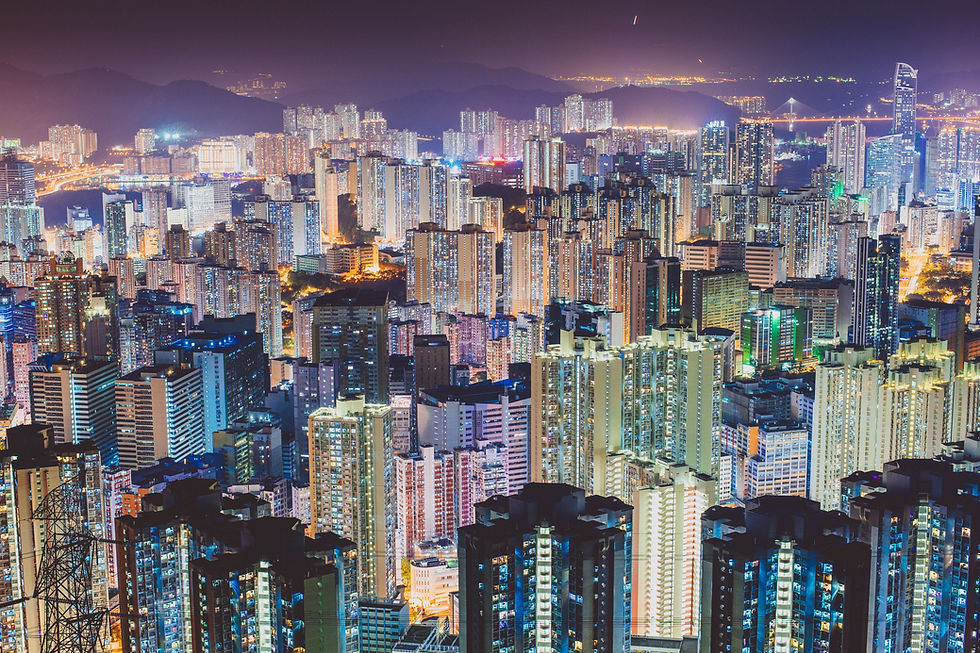
In the evolving landscape of urban development, AI is becoming more than a buzzword, it is becoming a critical enabler of change—reimagining how cities are designed, tested and built. By embedding AI directly into the core of city operations, technomancers are shaping urban futures that are not only smarter, but also more sustainable and responsive, helping to transform the urban future through intelligent, data-driven decisions.
Through cutting-edge tools, consultants are able to reduce time spent on routine tasks such as report generation and data search but instead dedicating more time to insight, creativity and high-impact decision making. Generative AI empowers planners to test multiple design scenarios quickly, optimizing for cost, emission and resilience in a fraction of the time traditional workflow requires. This transforms design thinking into a dynamic and iterative process.
A 2023 study in Nature Communications by Marconcini et all, entitled Outlining where humans live, the World Settlement Footprint, shows how deep learning models trained on satellite imagery can identify urban heat islands and population vulnerability zones at scale. These insights can be used to help governments and planners prepare for climate risks with precision targeting, especially in low-income areas that typically receive less investment in adaptation infrastructure. This evidence reinforces the value of integrating AI into environmental analysis as a proactive tool for equitable urban planning.
AI is also enhancing how data is visualized and applied in real time. By leveraging digital twins to create 3D city models infused with live data, we are able to test critical infrastructure designs before a single shovel hits the ground. These models integrate data from disparate sources, including climate, energy and population trends, allowing us to simulate the future with remarkable accuracy. The result is infrastructure that is both fit for purpose and forward-looking.
Environmental responsibility is also deeply embedded into AI strategy, to provide us with real-time insights into carbon footprint and financial implications of early design choices. Meanwhile, the machine learning-powered tools use image recognition to identify species in the planning area, ensuring biodiversity considerations are incorporated into project planning. By blending environmental science with data intelligence, we are not just protecting ecosystems but designing to support and build in harmony with them.
This approach is consistent with findings in recent research. A 2020 survey entitled State of the Art Survey of Deep Learning and Machine Learning Models for Smart Cities and Urban Sustainability by Nosratabadi et al. highlights how deep learning models are already influencing urban sustainability, with applications ranging from transportation to energy production. More recently in their paper Leveraging Generative AI for Urban Digital Twins, Xu et al. in 2024 explored how generative AI can be applied to urban digital twins, enabling cities to simulate design alternatives and infrastructure scenarios at scale. Yet the rise of AI in city planning also brings important ethical considerations. A study published in Urban Governance in 2024 warns that bias, data privacy and algorithmic opacity must be addressed in proactive manner to ensure fair and transparent planning outcomes.
The latest breakthroughs in the field stand out because they balance these concerns with practical implementation. The technology is not isolated in innovation labs but embedded in day-to-day workflows and are tested in real projects before being refined through user feedback as well as input from urban stakeholders. Cities like Amsterdam and Singapore have already begun deploying similar AI-driven tools and reports from Deloitte and ThoughtLab. It is suggested that over 80% of major cities across the globe will follow suit within the next decade or sooner.
Ultimately, what this means is that AI does not need to be theoretical or disruptive to be transformative. When applied with care, creativity and purpose, it enables design teams to move faster, think broader and build better. In this vision of the future, AI will not replace the planner but be used to enhance their judgement, sharpen their insights and scale their outcomes, ultimately working to transform the urban future.


